Lead white

A warm off-white named after the oldest made white pigment, a lead compound painters used for over two thousand years.

Overview

Lead white is a warm off-white. The code used here, #F3EEE2, has red, green and blue all very high, with blue a little lower, which gives it a faint cream cast. It sits almost on top of alabaster and is warmer than the near-neutral code for titanium white, the pigment that replaced it.

The name belongs to a pigment, not a paint chip. Lead white is basic lead carbonate, one of the oldest pigments people made rather than dug up. Greek writers described scraping it from lead hung over vinegar, and later the “Dutch” or stack process sealed pots of lead and vinegar in sheds of horse manure or tan bark to make it by the ton. Until the 1800s it was the only white in European easel painting, and it went into house paint, ceramics and face powder too. Painters also call it flake white, and the cosmetic was called ceruse.

It is also a poison. Lead white causes lead poisoning, once called painter’s colic, and from 1909 onward countries began to ban it from house paint. Its weight in lead has a second effect: it stops X-rays, so in a radiograph of an old painting the lead white shows up bright, revealing underdrawings, changes of mind and sometimes a whole earlier picture underneath.

On screens, #F3EEE2 is a soft background that is easier on the eyes than pure white. Black text on it reaches 18.1:1, while white text all but disappears (1.2:1). It suits earth browns, ochres, sky blues and the flesh tones that painters once mixed from lead white itself.

HEX#F3EEE2
RGBrgb(243, 238, 226)
HSLhsl(42, 41%, 92%)
HSV42°, 7%, 95%
CMYK0, 2, 7, 5
OKLCHoklch(95.0% 0.017 88.0)
Every code converts from the HEX value #F3EEE2. No color standard defines lead white, and we found no published source for #F3EEE2, so treat it as a typical value, not an official one. The 1955 ISCC-NBS dictionary has no entry for lead white, flake white or ceruse, and Wikipedia’s article on the pigment gives no code. Real lead white varies with how it was made and what it was ground in. CMYK is a screen-based estimate; print results vary.
Lead white color card, hex #F3EEE2: “Lead the way”

Lead white on the color map

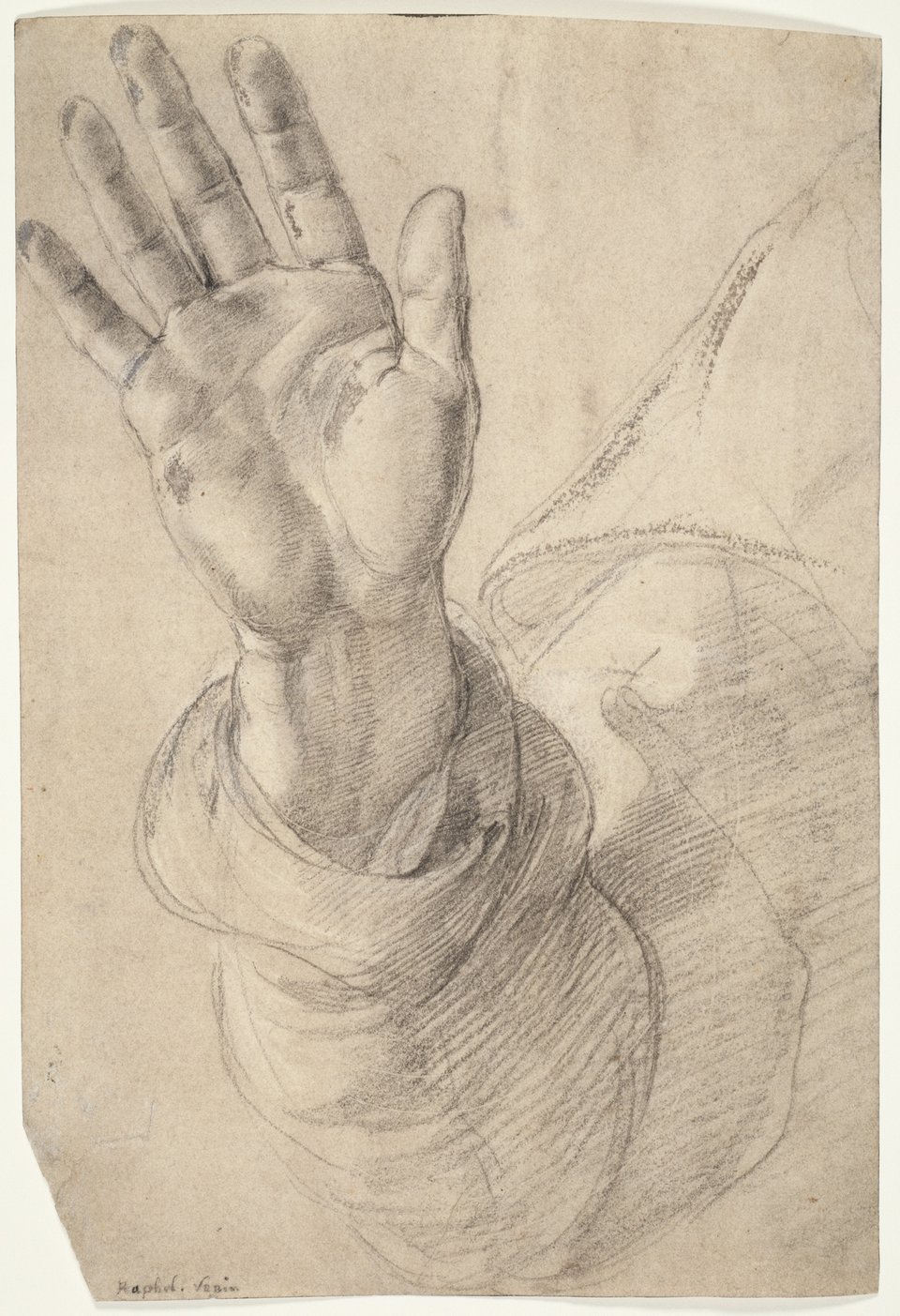
Titanium white sits a little above and to the right of the reference: slightly lighter and nearly neutral, with almost no hue. The highlights in Raphael’s drawing sit inside the outline near the bottom edge, a little to the left: darker and a touch more orange, partly because the white is thin, has aged and lies on cream paper. The outline is an approximate range, not a measured one.

Shades and tints

Tints with white

Shades with black

Tones with gray

Lead white sits in the middle. Tints add white, shades add black and tones add gray, in 10% steps out from it. Tap any swatch to copy its code.

Light and dark lead white

#FAF8F3
Pale lead whiteMixed 60% with white. Almost pure white with a breath of warmth.
#F2F0E6
AlabasterNearly the same, a touch less warm. See alabaster
#F3EEE2
Lead whiteThe reference color.
#F3F4F0
Titanium whiteCooler and almost neutral. The modern white that took lead white’s place. See titanium white
#E6D8C1
Raphael’s highlightsSampled from the brightest lead white touches in Raphael’s hand study at the Art Institute of Chicago.
#AAA79E
Lead grayMixed 30% with black. A warm stone gray.
#615F5A
Deep leadMixed 60% with black. A dark warm gray with enough contrast for white text.

Colors that go with lead white

Pairings that work in rooms, outfits and interfaces.

Old master ground

A pale ground under earth colors, the way painters primed panels and canvas.

Heightened drawing

Cream paper, black chalk and touches of white, as in the Raphael drawing below.

Painted sky

Painters mixed lead white with blue for skies. Light and calm.

Flesh tones

Lead white with reds and browns made the skin in centuries of portraits.

Court portrait

A whitened face, red lips, black velvet and gold. Dramatic on a dark page.

Radiograph

The grays of an X-ray, where lead white shows up brightest.

Color-wheel palettes

Pick a palette to see where its colors sit on the color wheel. The caret marks lead white. Tap a band to copy its code.

Similar colors

Linen94%Isabelline94%Antique white92%Lead whiteTitanium white90%Eggshell91%Alabaster97%

Lined up by hue around lead white. Hover a color to see how similar it is.The bar under each name shows how similar it is. Similarity comes from the distance between the two colors in OKLab, a model of how we see color.

Lead white vs titanium white

Lead white#F3EEE2 · hue 42°
  • Warmer, with a faint cream cast
  • Basic lead carbonate, made since antiquity
  • Toxic; banned from house paint in many countries
Titanium white#F3F4F0 · hue 75°
  • Cooler and nearly neutral
  • Titanium dioxide, a 20th-century pigment
  • Largely replaced lead white

Meaning

  • Painters’ white
  • Lead poison
  • Face paint
  • Bright in X-rays

Lead white’s meanings come from the pigment: for centuries it was simply what white paint was made of, and the same lead that made it opaque made it dangerous. It whitened faces at royal courts, sickened the people who made and used it, and today helps scientists see inside paintings and date them. The claims below rest on dictionaries, laws and conservation science. No study has tested how the color lead white makes people feel.

Named for the metal

Word history

Merriam-Webster dates “white lead” in English to before the 12th century and defines it as a heavy, poisonous basic carbonate of lead used especially formerly in paints. Ceruse, from Latin cerussa, meant white lead as a pigment by the 14th century and later also a cosmetic containing it. Flake white is white lead selected for whiteness and fine texture, for artists.1, 2, 3

A known poison

Well established

In the 1st century BCE Vitruvius warned that lead pipes produce white lead, “said to be harmful to the human body.” Lead poisoning was long called painter’s colic. A 1921 International Labour Organization convention barred white lead from the interior painting of buildings, though not from artistic painting, and in 1977 the US banned lead paint for consumer use.4, 5, 6

Worn as face paint

Historical record

White lead was a face whitener in ancient Greece, China and Japan, and in 18th-century England. Venetian ceruse, the most prized kind in 16th-century Europe, could cause skin damage, hair loss and in some cases death. It is often said that Elizabeth I wore it, but historians disagree on how much evidence there is.7, 8

Bright in X-rays

Conservation science

Lead absorbs X-rays, so paint rich in lead white looks bright white in a radiograph while carbon black lets the rays through. Conservators use this to see underdrawings, changes made while painting and sometimes earlier pictures hidden beneath.9, 10

A clock in the lead

Scientific study

In 1967 chemists showed that radioactive lead-210, which decays with a half-life of 22 years once lead is refined, can tell old lead white from modern. In 2021 a study of 77 dated Dutch paintings found that the lead isotopes in their lead white shift through the 17th century, tracking events such as the English Civil War.11, 12

Sources (12)
  1. Merriam-Webster, “white lead”, definition and first known use.
  2. Merriam-Webster, “ceruse”, senses 1 and 2, etymology and first known use.
  3. Merriam-Webster, “flake white”.
  4. Wikipedia, “Lead poisoning”, synonyms and history, quoting Vitruvius, De architectura, book 8.
  5. International Labour Organization, Convention No. 13 concerning the Use of White Lead in Painting (1921), articles 1 and 2, text as reproduced by the University of Oslo law library.
  6. US Code of Federal Regulations, 16 CFR part 1303, “Ban of lead-containing paint”, Consumer Product Safety Commission, 42 FR 44199, 1 September 1977.
  7. Wikipedia, “Venetian ceruse”, citing Eldridge (2015), Thomas, Beneath the Surface (2020), Riehl (2010) and Maltby (2015).
  8. Wikipedia, “Lead white”, history of use, citing St. Clair, The Secret Lives of Color (2017) and DeGalan, “Lead White or Dead White?”, Bulletin of the Detroit Institute of Arts 76 (2002).
  9. Wikipedia, “Cultural property radiography”.
  10. Morris, M. (2024). “Radiography can reveal hidden layers within an artwork”. Saint Louis Art Museum, 28 June 2024.
  11. Keisch, B., Feller, R. L., Levine, A. S. and Edwards, R. R. (1967). Dating and authenticating works of art by measurement of natural alpha emitters. Science, 155(3767), 1238–1242. doi:10.1126/science.155.3767.1238
  12. D’Imporzano, P. et al. (2021). Time-dependent variation of lead isotopes of lead white in 17th century Dutch paintings. Science Advances, 7(49), eabi5905. doi:10.1126/sciadv.abi5905

History

Lead white was made the same basic way, from lead and vinegar, for more than two thousand years. Its story runs from Greek recipes through Renaissance studios and royal courts to labor law and the laboratory.

  1. About 300 BCE

    Theophrastus describes lead placed in earthen pots over sharp vinegar, with the white crust scraped off, ground and boiled. Lead white was probably made from lead and vinegar in China around the same time, and the method reached Japan in the 7th century.1, 2

  2. 2nd century CE

    Painters in Roman Egypt use lead white in mummy portraits, among its early documented uses in painting.2

  3. 1518–20

    Raphael draws a raised hand for a figure of Saint Peter in black chalk, heightened with white chalk and lead white. The lead white has since partly darkened.3

  4. 1500s

    Venetian ceruse, a face whitener of white lead, is the most sought-after kind in Europe. A 1688 recipe mixes water, vinegar and lead.4

  5. 1600s

    The Dutch or stack process seals pots of lead and vinegar in rooms of horse manure or tan bark, whose heat and carbon dioxide speed the reaction. England grants a monopoly on lead white making in 1622.2

  6. 1800s–1900s

    Lead white, still the only white in European easel painting into the 19th century, gives way first to zinc white and then to titanium white.2

  7. 1921

    The International Labour Organization adopts a convention to bar white lead from the interior painting of buildings. Artistic painting is exempt.5

  8. 1967

    Chemists publish a way to date lead white by its radioactive lead-210, to tell old paintings from modern ones.6

  9. 1977

    The US Consumer Product Safety Commission bans lead-containing paint for consumer use.7

  10. 2021

    Lead isotopes in the lead white of 77 dated Dutch paintings are shown to change over the 17th century, a new tool for dating and attribution.8

Sources (8)
  1. Wikipedia, “White lead”, history, quoting Theophrastus, On Stones, after Holley, The Lead and Zinc Pigments, and citing Partington, A Short History of Chemistry (1937).
  2. Wikipedia, “Lead white”, citing Gettens, Kühn and Chase, “Lead White”, in Artists’ Pigments, vol. 2 (1993), and Delaney et al., Scientific Reports 7 (2017) on Fayum portraits.
  3. Art Institute of Chicago, “Upraised Right Hand, with Palm Facing Outward: Study for Saint Peter”, Raphael, 1518/20 (1993.248.1813), medium line.
  4. Wikipedia, “Venetian ceruse”, citing Eldridge (2015).
  5. International Labour Organization, Convention No. 13 concerning the Use of White Lead in Painting (1921), and Wikipedia, “White Lead (Painting) Convention, 1921”.
  6. Keisch, B. et al. (1967). Dating and authenticating works of art by measurement of natural alpha emitters. Science, 155(3767), 1238–1242. doi:10.1126/science.155.3767.1238
  7. US Code of Federal Regulations, 16 CFR part 1303, “Ban of lead-containing paint”, 42 FR 44199, 1 September 1977.
  8. D’Imporzano, P. et al. (2021). Time-dependent variation of lead isotopes of lead white in 17th century Dutch paintings. Science Advances, 7(49), eabi5905. doi:10.1126/sciadv.abi5905

Lead white in use

A black chalk drawing of a raised right hand, palm outward, with a full sleeve below, on cream paper, with pale highlights on the palm and small dark gray patches on the fingertips
#E6D8C1#D9CAB2#A49685#6F6356
DrawingUpraised Right Hand: Study for Saint Peter, Raphael (1518–20)

Raphael modeled this hand in black chalk on cream paper and lit it with white chalk and lead white. The brightest touches reach about #E6D8C1, darker and warmer than the web code, over paper near #D9CAB2. The museum notes the lead white is partly oxidized; the small gray patches on the fingertips, near #6F6356, look like white that has darkened.

#E6D8C1#D9CAB2#A49685#6F6356
Source: Art Institute of Chicago

Palettes are sampled in-house.

Questions

What color is lead white?

A warm off-white with a faint cream cast. The code used here is #F3EEE2 (RGB 243, 238, 226). No standard defines it; it stands for the old pigment, whose real color varies with how it was made and what it was mixed with.

Is lead white poisonous?

The pigment is. Lead white is basic lead carbonate and causes lead poisoning if swallowed or breathed in as dust, which is why most countries restrict it and art suppliers advise against it. The color on a screen is just a code and is harmless.

Is flake white the same as lead white?

Yes. Flake white is white lead chosen for its whiteness and fine texture and sold to artists. White lead and ceruse are older names for the same pigment.

What is the difference between lead white and titanium white?

Lead white (#F3EEE2) is a warmer off-white named after basic lead carbonate, used since antiquity. Titanium white (#F3F4F0) is cooler and nearly neutral, named after titanium dioxide, the 20th-century pigment that largely replaced it.

Why does lead white show up in X-rays?

Lead is heavy and absorbs X-rays, so paint rich in lead white looks bright in a radiograph. Conservators use this to see underdrawings, changes made during painting and hidden earlier pictures.

What was Venetian ceruse?

A 16th-century face whitener made with white lead, prized as the best kind in Europe. It could damage the skin, make hair fall out and, in some cases, kill. Whether Elizabeth I wore it is still debated.

Can lead white date a painting?

It can help. Freshly refined lead carries radioactive lead-210 that decays over decades, and the mix of lead isotopes in lead white changed with where the lead was mined, so both can point to when the paint was made.

What colors go with lead white?

Earth browns, ochre, sky blues and warm flesh tones, the colors painters once mixed with it. Charcoal or black gives the strongest contrast for text.