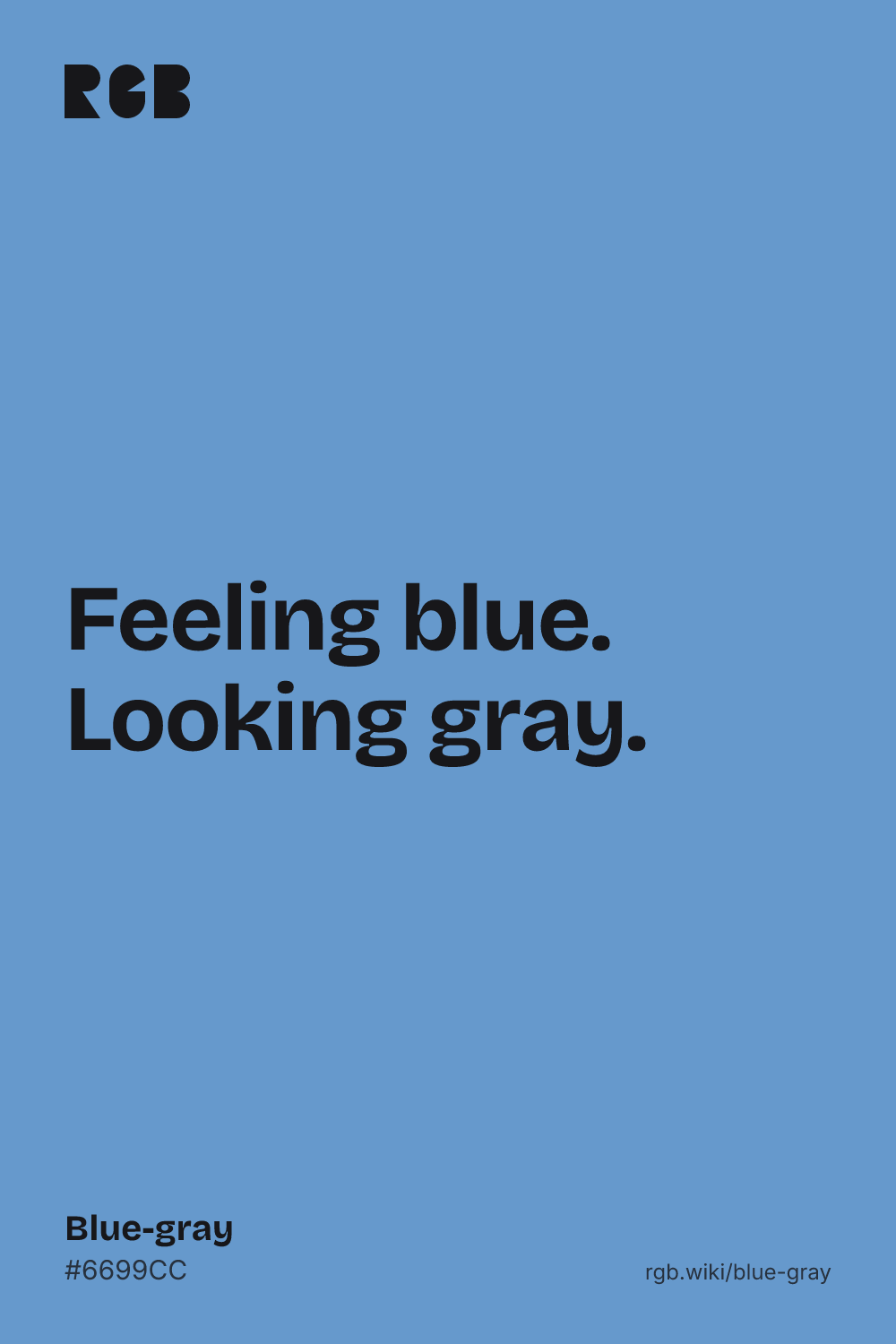
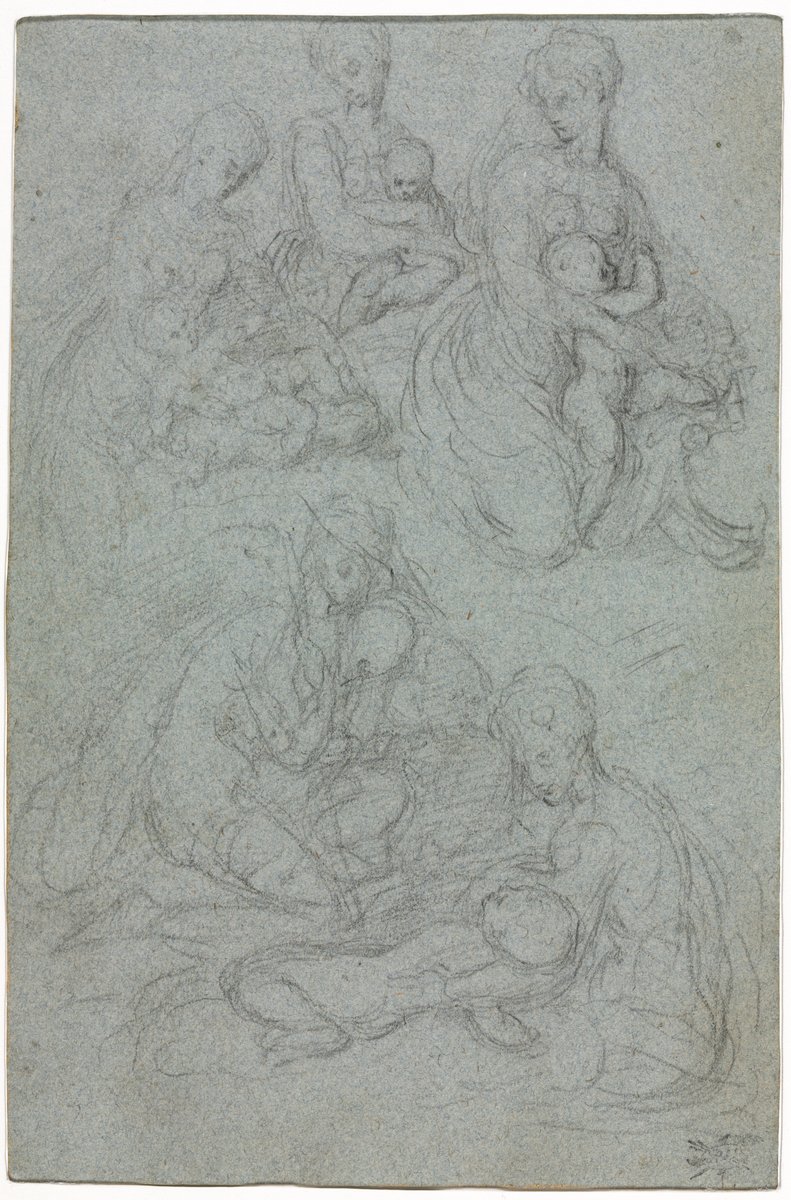
Blue-gray is blue softened with gray. The code most color lists use, #6699CC, is a calm, medium blue: blue leads, red trails, and the three channels climb in even steps of 51. Blue-gray is a mix name rather than one fixed color, so it covers everything from a gray with a hint of blue to a blue with a hint of gray.
Unlike blue-green, blue-gray has no place on the color wheel, because it mixes a hue with a neutral. Painters gray a blue with black and white, or with a touch of its opposite on the wheel, orange. The 1955 ISCC-NBS system of color names draws the line carefully: a bluish gray is a gray with a little blue, centered on #81878B, and a grayish blue is a blue with some gray, centered on #536878.
By either measure, the web code is barely gray. It is about as colorful as steel blue and three times as colorful as slate gray, and the ISCC-NBS system would call it light blue. People who named colors in the xkcd survey picked a much grayer blue gray, #607C8E. Mix the code half and half with a gray of the same lightness and you get #7E97B0, closer to what most people mean.
English once used livid for colors like this. From Latin lividus, “discolored by bruising”, it named bruised flesh and dark grayish tones before it came to mean pale, and then furious. In design, #6699CC is a friendly, quiet blue. Dark text reads well on it, at 7 to 1. White text reaches only 3 to 1, so put white on a deeper shade such as #334C66.