Cadmium yellow

A bright, lasting yellow made from a toxic metal, on painters’ palettes from Monet to Bob Ross.

Overview

Cadmium yellow is a bright, opaque yellow pigment made from the metal cadmium: it is cadmium sulfide. Mix in selenium and the same compound turns orange and then red, which is cadmium red. Painters took it up in the 1800s as a yellow that held its color better than chrome yellow.

On screen, cadmium yellow is usually #FFF600, a sharp lemon yellow. It is one step from lemon (#FFF700), too little to see. The code comes from color websites, not from the paint. Real cadmium yellow runs from pale lemon to deep orange-yellow, and the 1930 A Dictionary of Color placed its cadmium yellow samples among the oranges and orange-yellows (#EAA221). The dictionary’s greener cadmium lemon is the closer match to the code.

Cadmium was found through this yellow in 1817, and painters had the pigment by the 1840s. Monet used it in his haystacks and water lilies, and Bob Ross named it in most of his television paintings. Some early cadmium yellows have faded or darkened, in works by Matisse, Munch and Miró. Cadmium is toxic, mainly as breathed dust, so artists handle the dry pigment with care.

As a design color, #FFF600 is very light and very loud. It needs dark text: black on it reaches about 18:1, while white text is unreadable.

HEX#FFF600
RGBrgb(255, 246, 0)
HSLhsl(58, 100%, 50%)
HSV58°, 100%, 100%
CMYK0, 4, 100, 0
OKLCHoklch(94.9% 0.204 107.0)
Every code converts from the HEX value #FFF600. No color standard defines cadmium yellow. #FFF600 is the code most color lists use; Wikipedia gives it, citing the color site ColorHexa. Maerz and Paul’s A Dictionary of Color (1930), as filed by the ISCC-NBS dictionary, puts its cadmium yellow among strong and moderate oranges and orange-yellows, and its cadmium lemon among the greenish yellows. CMYK is a screen-based estimate; print results vary.
Cadmium yellow color card, hex #FFF600: “Heavy metal’s sunny side”

Cadmium yellow on the color map

The vivid greenish yellow center sits straight below the code, right on the edge of the outline: darker, at the same hue. The 1930 dictionary’s cadmium yellow sits far down and to the left, toward orange, and its deepest samples fall off the map, pinned to the left edge. The paint runs much warmer and deeper than the code. The outline is an approximate range, not a measured one.

Shades and tints

Tints with white

Shades with black

Tones with gray

Cadmium yellow sits in the middle. Tints add white, shades add black and tones add gray, in 10% steps out from it. Tap any swatch to copy its code.

Light and dark cadmium yellow

Tints and shades of cadmium yellow, then the other colors of the cadmium family.

#FFFCB2
Pale cadmium yellowMixed 70% with white. A soft, creamy yellow.
#FFFA66
Light cadmium yellowMixed 40% with white. Bright and fresh.
#FFF600
Cadmium yellowThe reference color.
#B2AC00
Dark cadmium yellowMixed 30% with black. Black pushes it toward olive, not gold.
#DCD300
Cadmium lemonISCC-NBS vivid greenish yellow, where the 1930 dictionary files its cadmium lemon.
#EAA221
Dictionary cadmium yellowISCC-NBS strong orange yellow, one of the groups where the 1930 dictionary placed its cadmium yellow.
#ED872D
Cadmium orangeISCC-NBS strong orange, where the 1930 dictionary placed its cadmium orange.
#E30022
Cadmium redCadmium sulfide with selenium mixed in. The red end of the family. See cadmium red
#007959
Cadmium greenCadmium yellow mixed with viridian. ISCC-NBS strong green, where the 1930 dictionary files its cadmium green.

Colors that go with cadmium yellow

Pairings that work in rooms, outfits and interfaces.

Yellow and red

The two cadmiums side by side on black. Hot and graphic.

Painter’s primaries

Cadmium yellow and red with cobalt blue, the classic primary set.

Cadmium green mix

Cadmium yellow, viridian and the green painters mix from the two.

Monet’s thaw

Sunset gold, mauve and a dark haystack, sampled from Monet’s painting, with a cadmium accent.

Cadmium yellow and charcoal

Bright yellow on dark gray. Clear and sporty, like a warning sign.

Color-wheel palettes

Pick a palette to see where its colors sit on the color wheel. The caret marks cadmium yellow. Tap a band to copy its code.

Similar colors

Golden yellow71%Maize76%Canary yellow91%Cadmium yellowLemon99%Butter yellow75%Sunshine yellow91%

Lined up by hue around cadmium yellow. Hover a color to see how similar it is.The bar under each name shows how similar it is. Similarity comes from the distance between the two colors in OKLab, a model of how we see color.

Cadmium yellow vs chrome yellow

Cadmium yellow#FFF600 · hue 58°
  • A lemon yellow on screen
  • Cadmium sulfide, from the 1840s
  • Holds its color better in light
Chrome yellow#FFA700 · hue 39°
  • Leans toward orange
  • Lead chromate, from the early 1800s
  • Some kinds darken in light

Meaning

  • Cadmium sulfide
  • Lightfast
  • Painters’ yellow
  • Toxic dust

Cadmium yellow stands for a bright yellow that lasts. It gave painters a strong, opaque yellow that held up better than chrome yellow, and it has stayed on the palette from Monet to Bob Ross. The price is toxicity, and some early cadmium yellows have aged badly. Color research tests the broad word yellow, not this pigment, so nothing here is about mood.

One compound, many yellows

Reference works

Cadmium yellow is cadmium sulfide, Colour Index Pigment Yellow 37. Zinc sulfide mixed in gives paler, greener yellows (Pigment Yellow 35). Cadmium selenide mixed in shifts it to orange and then to cadmium red.1, 2
Bright and lasting, with limits

Reference works

When cadmium pigments arrived there were hardly any stable bright yellows and oranges. Cadmium yellow is lightfast in oil, but the paler shades can fade in sunlight, and cadmium does not suit fresco.1, 2

Toxic, mainly as dust

Reviews and guidance

Cadmium is toxic in small amounts, above all when breathed in. Locked in an insoluble pigment it is much less available, so the main risks are dry powder, sanding, spraying and pastel dust. A 2019 review found the greatest consumer risks in old toys and the enamel on decorated drinking glasses.1, 3

Europe looked at a ban

Regulatory record

Sweden proposed banning cadmium in artists’ paints, mainly because paint rinsed down the drain can reach farmland through sewage sludge. In 2014 the EU’s risk assessment committee judged the risk negligible and the ban not justified.4

Some early yellows have aged

Technical studies

Cadmium yellow has faded or darkened in Matisse’s Le Bonheur de vivre, Munch’s The Scream and works by Miró. Studies point to poorly made pigment and to moisture, which turns the sulfide into white cadmium sulfate.5, 6, 7

A TV painter’s staple

Fan-compiled data

Bob Ross named cadmium yellow in 346 of the 403 paintings logged from The Joy of Painting, more than any other yellow. The count comes from a fan-compiled list of the colors he named on air.8

Sources (8)
  1. Wikipedia, “Cadmium pigments”, citing Ullmann’s Encyclopedia of Industrial Chemistry, “Artists’ Colors,” and Fiedler and Bayard (1986).
  2. ColourLex, “Cadmium yellow”, citing Fiedler and Bayard, “Cadmium Yellows, Oranges and Reds,” in Artists’ Pigments, vol. 1 (1986).
  3. Turner, A. (2019). “Cadmium pigments in consumer products and their health risks.” Science of the Total Environment 657: 1409–18. doi:10.1016/j.scitotenv.2018.12.096.
  4. European Chemicals Agency, Committee for Risk Assessment (2014). Opinion on an Annex XV dossier proposing restrictions on cadmium and its compounds in artists’ paints, adopted 26 November 2014.
  5. Mass, J., et al. (2013). “SR-FTIR imaging of the altered cadmium sulfide yellow paints in Henri Matisse’s Le Bonheur de vivre (1905–6).” Analyst 138(20): 6032–43. doi:10.1039/c3an00892d.
  6. Monico, L., et al. (2020). “Probing the chemistry of CdS paints in The Scream by in situ noninvasive spectroscopies and synchrotron radiation x-ray techniques.” Science Advances 6(20): eaay3514. doi:10.1126/sciadv.aay3514.
  7. Gomez Lobon, M., et al. (2023). “A study of cadmium yellow paints from Joan Miró’s paintings and studio materials preserved at the Fundació Miró Mallorca”. Heritage Science 11: 145.
  8. Jared Wilber, Bob Ross Paintings data, as published by TidyTuesday (21 February 2023); counted in-house.

History

Cadmium was found because of a yellow, and the yellow became a paint within a generation. It has stayed on painters’ palettes ever since.

  1. 1817

    Friedrich Stromeyer discovers cadmium in impure zinc compounds sold in German pharmacies. Karl Hermann, studying the same impurity, notes the yellow solid it forms with hydrogen sulfide: cadmium sulfide, the future cadmium yellow.1

  2. 1840s

    Cadmium yellow is recognized as a pigment, but the metal is scarce and the paint stays expensive. The first known use of “cadmium yellow” in English is from 1843.2, 3

  3. 1890–91

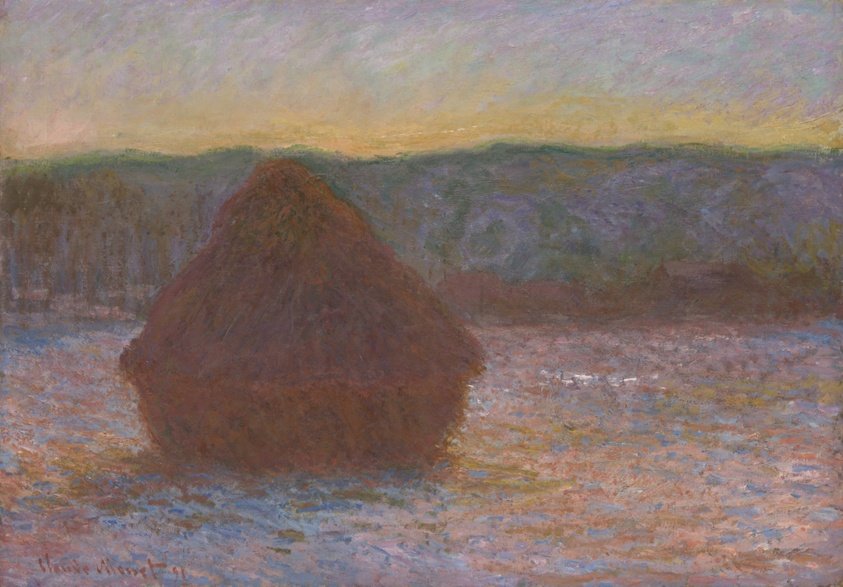
    Monet paints Stack of Wheat (Thaw, Sunset). X-ray analysis by the Art Institute of Chicago finds cadmium yellow among its pigments.4

  4. 1905–06

    Matisse paints Le Bonheur de vivre. Some of its cadmium yellows have since altered, the sulfide turning to cadmium sulfate.5

  5. About 1910

    Munch paints a version of The Scream with cadmium sulfide yellows. A century later, some of them are turning to cadmium sulfate, mainly through moisture.6

  6. 1917–19

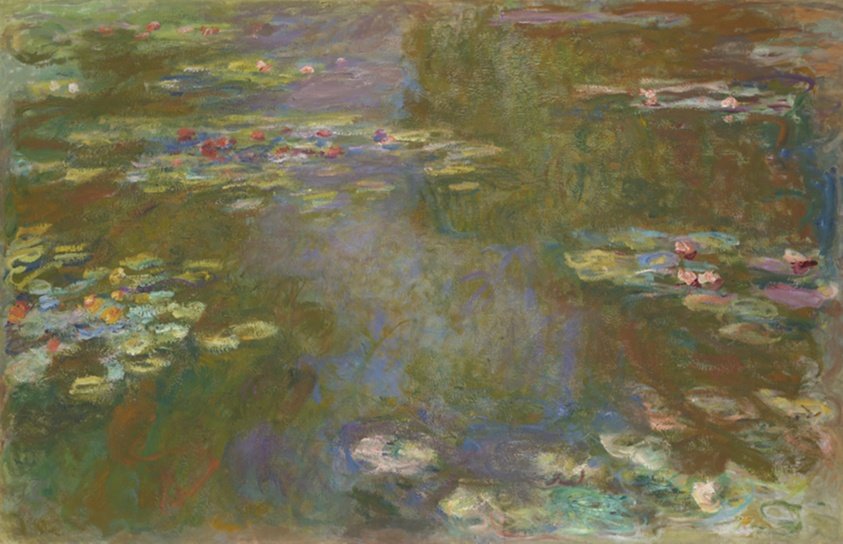
    Monet’s Water Lily Pond uses cadmium yellow and cadmium orange alongside vermilion, viridian and cobalt blue.7

  7. 1983–1994

    Bob Ross hosts The Joy of Painting on public television and names cadmium yellow in most of his paintings.8, 9

  8. 2014

    The EU’s Committee for Risk Assessment rejects a proposed ban on cadmium in artists’ paints as not justified, given the negligible risk it found.10

  9. 2023

    A study of paints from Joan Miró’s studio ties his faded yellows to one maker’s cadmium yellow, whose make-up left it prone to break down.11

Sources (11)
  1. Wikipedia, “Cadmium”, citing C. S. Hermann, Annalen der Physik 59 (1818).
  2. Merriam-Webster, “cadmium yellow”, definitions and first known use.
  3. WebExhibits, Pigments through the Ages, “Cadmium yellow/red: history”.
  4. Art Institute of Chicago, “Cat. 32. Stack of Wheat (Thaw, Sunset), 1890/91”, in Monet Paintings and Drawings at the Art Institute of Chicago (Art Institute of Chicago, 2014), technical report.
  5. Mass, J., et al. (2013). “SR-FTIR imaging of the altered cadmium sulfide yellow paints in Henri Matisse’s Le Bonheur de vivre (1905–6).” Analyst 138(20): 6032–43. doi:10.1039/c3an00892d.
  6. Monico, L., et al. (2020). “Probing the chemistry of CdS paints in The Scream by in situ noninvasive spectroscopies and synchrotron radiation x-ray techniques.” Science Advances 6(20): eaay3514. doi:10.1126/sciadv.aay3514.
  7. Art Institute of Chicago, “Cat. 47. Water Lily Pond, 1917/19”, in Monet Paintings and Drawings at the Art Institute of Chicago (Art Institute of Chicago, 2014), technical report.
  8. Wikipedia, “The Joy of Painting”, broadcast dates.
  9. Jared Wilber, Bob Ross Paintings data, via TidyTuesday (2023): cadmium yellow in 346 of 403 paintings.
  10. European Chemicals Agency, Committee for Risk Assessment (2014). Opinion on an Annex XV dossier proposing restrictions on cadmium and its compounds in artists’ paints, adopted 26 November 2014.
  11. Gomez Lobon, M., et al. (2023). “A study of cadmium yellow paints from Joan Miró’s paintings and studio materials preserved at the Fundació Miró Mallorca”. Heritage Science 11: 145.

Cadmium yellow in use

A large dark haystack stands in a snowy field at sunset, with a band of golden light above purple hills and a mauve sky
#BF9860#644942#8D7978#A49B9B
PaintingStack of Wheat (Thaw, Sunset) by Claude Monet (1890–91)

One of Monet’s haystack series, at the Art Institute of Chicago. The museum’s technical report found cadmium yellow among its pigments, with cobalt blue, viridian, emerald green and vermilion. The golden band of the sunset samples as about #BF9860, far softer than the web’s #FFF600.

#BF9860#644942#8D7978#A49B9B
Source: Art Institute of Chicago
A pond seen from above, its greenish water reflecting blue and violet sky, with clusters of yellow-green lily pads and small pink and red blossoms
#AF9547#9F644F#605A39#878267
PaintingWater Lily Pond by Claude Monet (1917–19)

A late view of Monet’s pond at Giverny, at the Art Institute of Chicago. Analysis found cadmium yellow and cadmium orange in the paint, along with zinc yellow, vermilion, red lake, viridian, cobalt blue, ultramarine and cobalt violet. The warm yellow of the lily pads samples as about #AF9547.

#AF9547#9F644F#605A39#878267
Source: Art Institute of Chicago

Palettes are sampled in-house.

Questions

What color is cadmium yellow?

A bright, opaque yellow. On screen the usual code is #FFF600 (RGB 255, 246, 0), a sharp lemon yellow. The pigment itself ranges from pale lemon to deep orange-yellow, and most of it is warmer than the code.

What is the hex code for cadmium yellow?

#FFF600 (RGB 255, 246, 0) is the code most lists use; no standard defines it. A 1930 color dictionary placed its cadmium yellow samples among the oranges and orange-yellows, around #EAA221.

Is cadmium yellow the same as lemon?

On screen, nearly: #FFF600 and lemon’s #FFF700 differ by one step of green, too little to see. The names come from different places: cadmium yellow is a pigment, and lemon is named after the fruit.

Is cadmium yellow toxic?

Cadmium is toxic, especially when breathed in as dust. In paint the pigment is insoluble, so the main risks come from dry powder, sanding, spraying and pastel dust. Cadmium colors are not meant for children.

What is cadmium yellow made of?

Cadmium sulfide (Pigment Yellow 37). Zinc sulfide mixed in makes paler, greener yellows; selenium mixed in turns it orange and then red, which is cadmium red.

What does “cadmium yellow hue” mean?

On a paint tube, “hue” means the color is imitated with other pigments instead of genuine cadmium. It looks similar but can mix and cover differently.

Why is it called cadmium?

From Latin cadmia, a name for zinc ores, from Greek kadmeia, “Theban earth,” after Cadmus, the legendary founder of Thebes. The metal was found in a zinc compound in 1817.

What colors go with cadmium yellow?

Cadmium red and cobalt blue for a primary look, viridian for a fresh green contrast, charcoal and black for drama, and the soft golds and browns of Monet’s haystacks for warmth.