Stone

A warm mid gray named after building stone, a name that also covers a pale beige.

Overview

Stone is a medium gray with a faint warm cast. The code used here, #8B8680, has red a little ahead of green and green a little ahead of blue, so it leans toward brown without turning beige. It is a touch darker than heather gray and cement, and warmer than pewter, which has a blue cast.

The name points two ways. In English, stone as a color can mean a dull light gray or a beige, the colors of different rocks. The web code takes the gray side. It sits very close to RAL 7030 Stone grey, #8C8C83 on the German standard’s own color list, and India’s ₹500 note, which the Reserve Bank of India describes as “stone grey”.

The other side is pale and yellowish. Georgian and Regency house painters sold “stone colour” as an off-white, to make stucco fronts and window frames look like Bath or Portland stone. Ask people today and many still picture that side: in the xkcd color survey, the average color people called stone was #ADA587, a light khaki. The 1930 A Dictionary of Color had both kinds, with grey stone and stone grey on one side and light, middle and deep stone, all grayish yellows, on the other.

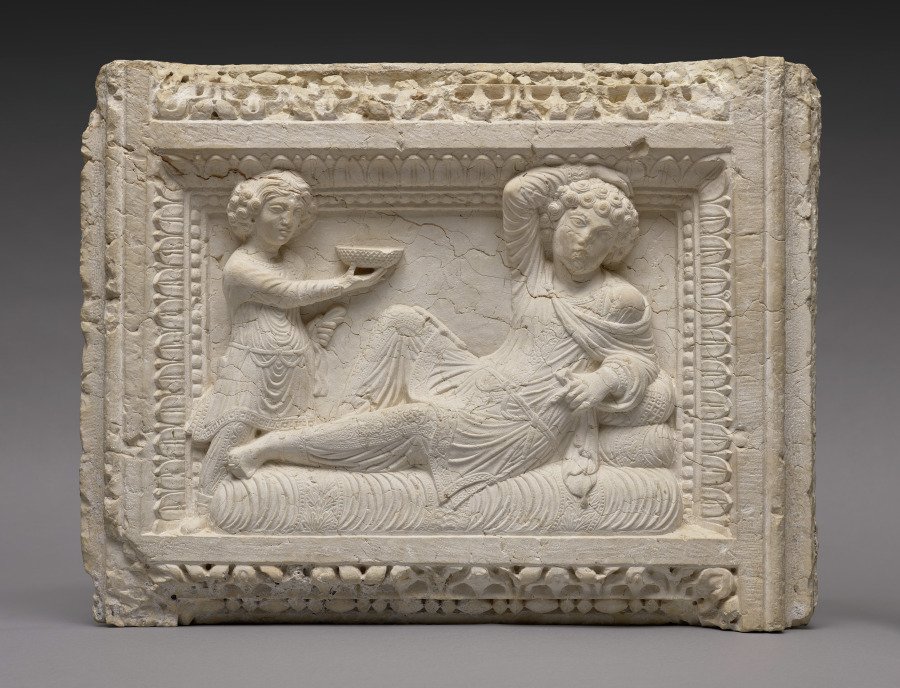
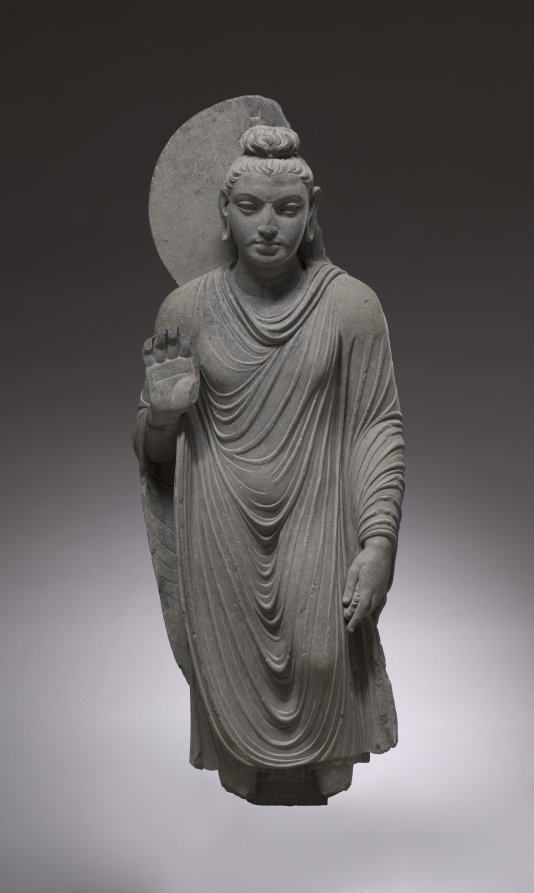
Real stone covers both. Gray schist from ancient Gandhara reads about #888581 in a museum photo, almost exactly the code, while a limestone relief from Palmyra reads as a pale warm beige near #B6AB9D. On screen, stone is a calm neutral for walls, outdoor gear and quiet interfaces. Black text reads well on it, at about 5.8 to 1. White text, at about 3.6 to 1, suits large type only.
HEX#8B8680
RGBrgb(139, 134, 128)
HSLhsl(33, 5%, 52%)
HSV33°, 8%, 55%
CMYK0, 4, 8, 45
OKLCHoklch(62.3% 0.011 72.6)
Every code converts from the HEX value #8B8680. No color standard defines stone. #8B8680 is the code most color lists use. It sits very close to RAL 7030 Stone grey (#8C8C83) and to light olive gray, where the 1955 ISCC-NBS dictionary files Maerz and Paul’s grey stone (1930). CMYK is a screen-based estimate; print results vary.
Stone color card, hex #8B8680: “Leave no stone unturned”

Stone on the color map

Stone is so muted that the close view spans the whole hue circle, with the code at the center. The schist sample sits almost on top of it. RAL’s Stone grey and the dictionary’s light olive gray are about as light but a little greener, just outside the outline to the right. The survey’s stone is lighter and yellower, above and to the right, and the Palmyra limestone sits straight above, much lighter. The outline is an approximate range, not a measured one.

Shades and tints

Tints with white

Shades with black

Tones with gray

Stone sits in the middle. Tints add white, shades add black and tones add gray, in 10% steps out from it. Tap any swatch to copy its code.

Light and dark stone

#B9B6B3
Pale stoneMixed 40% with white. A soft warm gray for backgrounds.
#8B8680
StoneThe reference color.
#8C8C83
Stone greyRAL 7030, from the German color standard. A hair greener and lighter.
#ADA587
Stone, as people picture itThe xkcd survey average for stone. The pale, yellowish side of the name.
#53504D
Dark stoneMixed 40% with black. A deep warm gray that holds white text.

Colors that go with stone

Pairings that work in rooms, outfits and interfaces.

Stone and cream

Soft and warm, like a limestone wall in the afternoon.

Portland

Pale stone, warm gray and black railings. Classic and civic.

Stone and moss

Gray rock and green growth. Calm and outdoorsy.

Stone and terracotta

Cool rock warmed by fired clay. Good for homes and gardens.

Stone and navy

A quiet gray on deep blue. Smart and steady.

Stone and charcoal

Tone on tone. Restful for interfaces and dark modes.

Color-wheel palettes

Pick a palette to see where its colors sit on the color wheel. The caret marks stone. Tap a band to copy its code.

Similar colors

Mocha77%Mink80%StoneEucalyptus68%Pewter78%Slate gray74%Light slate gray78%

Lined up by hue around stone. Hover a color to see how similar it is.The bar under each name shows how similar it is. Similarity comes from the distance between the two colors in OKLab, a model of how we see color.

Stone vs greige

Stone#8B8680 · hue 33°
  • A mid gray with a faint warm cast
  • Named after building stone
  • Holds black text; white only when large
Greige#BAB1A4 · hue 35°
  • Lighter and a little browner
  • Named from French grège, raw silk
  • A favorite pale neutral for walls

Meaning

  • House paint
  • Stucco
  • Portland stone
  • ₹500 note

Stone brings to mind walls, steps and monuments: plain, solid and lasting. Its meanings come from building, where for centuries real stone was the material to have and paint was the way to fake it. Color studies test broad words like gray and brown, not stone, so the claims here are about how the color was used.

A stock color for house painters

Historical record

A Bath colourman’s price list from the Regency period offers “Stone colour” oil paint at 5d a pound, beside lead colour, chocolate colour and several greens. The paint historian Patrick Baty notes that windows were then normally painted a pale stone color, an off-white.1

Stucco dressed up as stone

Well established

Stucco, a render of lime and sand, was long used on outside walls in imitation of stone. It was often lined to look like cut blocks, and some early mixes were washed with iron sulfate to look like Bath stone. John Nash used painted stucco across his Regent’s Park terraces in London, and the fashion spread.2, 3

A cement named after a stone

Historical record

When Joseph Aspdin patented his cement in 1824, he called it Portland cement because, once hardened, it looked like Portland stone, the pale limestone of St Paul’s Cathedral.4

Stone gray on India’s ₹500 note

Official record

When the Reserve Bank of India announced the new ₹500 note in November 2016, it gave the note’s color in three words: “The colour is stone grey.”5

Sources (5)
  1. Jane Austen’s World, “Painting a house during the Regency era: Q&A with colourman Patrick Baty” (2010).
  2. Constantinides, I. and Humphries, L. “Exterior Stucco”, Building Conservation.
  3. Local Local History, “Stucco, the Poor Man’s Stone”.
  4. Wikipedia, “Portland cement”, section History.
  5. Reserve Bank of India, “RBI Issues ₹ 500 banknotes inset letter ‘E’ in Mahatma Gandhi (New) Series”, press release, November 8, 2016.

History

Stone was a building material long before it was a color, and for centuries the color meant the look of good stone, copied in paint and render. A gray reading took over in the 20th century, with industrial color standards.

  1. After 1666

    After the Great Fire of London, Christopher Wren uses nearly one million cubic feet of pale Portland stone to rebuild St Paul’s Cathedral. Portland becomes London’s building stone of choice.1

  2. Early 1800s

    A Bath colourman sells “Stone colour” oil paint for outside work, and windows are normally painted a pale stone color.2

  3. 1811

    John Nash begins his Regent’s Park scheme in London, its terraces covered in stucco painted to look like stone. The fashion spreads across Britain.3, 4

  4. 1824

    Joseph Aspdin patents Portland cement, named for its likeness to Portland stone once hardened.5

  5. 1927

    A German committee publishes RAL 840, forty numbered colors, so makers and buyers no longer swap samples. Today’s RAL Classic range includes RAL 7030 Stone grey.6, 7

  6. 1930

    Maerz and Paul’s A Dictionary of Color prints grey stone and stone grey, alongside light stone, middle stone and deep stone.8

  7. 1955

    The ISCC-NBS dictionary files Maerz and Paul’s grey stone as a light olive gray, very close to today’s web code, and their light stone as a grayish yellow.8

  8. 2010

    In the xkcd color survey, the average color people call stone is #ADA587, a light khaki on the pale side of the name.9

  9. 2016

    India’s new ₹500 note is issued. The Reserve Bank of India gives its color as “stone grey”.10

Sources (10)
  1. Wikipedia, “Portland stone”.
  2. Jane Austen’s World, “Painting a house during the Regency era: Q&A with colourman Patrick Baty” (2010).
  3. Local Local History, “Stucco, the Poor Man’s Stone”.
  4. Constantinides, I. and Humphries, L. “Exterior Stucco”, Building Conservation.
  5. Wikipedia, “Portland cement”, section History.
  6. Wikipedia, “RAL colour standard”.
  7. RAL, “All RAL colours”, RAL 7030 Steingrau / Stone grey.
  8. Jaffer, A. “Maerz and Paul color names”, with ISCC-NBS centroids from “Color-Name Dictionaries”, MIT CSAIL.
  9. Munroe, R. “Color survey results”, xkcd (2010), with data at “The 954 most common RGB monitor colors” (CC0).
  10. Reserve Bank of India, “RBI Issues ₹ 500 banknotes inset letter ‘E’ in Mahatma Gandhi (New) Series”, press release, November 8, 2016.

Stone in use

A gray stone statue of the standing Buddha with a halo behind his head, his right hand raised, wearing a robe with deep curved folds
#888581#74706D#635F5B#4F4C48
SculptureStanding Buddha, Gandhara (150–200 CE)

Carved in what is now Pakistan, where artists mixed Mediterranean and South Asian styles and were among the first to show the Buddha in a heavy, toga-like robe. The gray schist reads about #888581 in its lit folds, almost exactly the stone code, and darker in the shadows.

#888581#74706D#635F5B#4F4C48
Source: Cleveland Museum of Art
A pale limestone relief in a carved frame of leaves and beads, showing a curly-haired man reclining on cushions while a standing attendant holds out a bowl
#CDC3B4#B6AB9D#A19687#867A6B
SculptureTomb Relief, Palmyra (230 CE)

A slab that once sealed a burial niche in a tomb at Palmyra, in Syria. A wealthy man reclines on a cushioned bed while an attendant offers him a bowl of wine. The limestone is the other stone: a pale, warm beige, about #B6AB9D, close to the “stone colour” of old house paint.

#CDC3B4#B6AB9D#A19687#867A6B
Source: Cleveland Museum of Art

Palettes are sampled in-house.

Questions

What color is stone?

A medium gray with a faint warm cast. The code used here is #8B8680 (RGB 139, 134, 128).

Is stone gray or beige?

It can be either. The web code is a warm gray, close to RAL 7030 Stone grey. In older house paint and in many people’s minds, stone is a pale, yellowish beige, like the xkcd survey average #ADA587.

Is there an official stone color code?

No. #8B8680 is the code most color lists use. The nearest standard is RAL 7030 Stone grey, shown as #8C8C83 on RAL’s own list.

What is the difference between stone and greige?

Stone (#8B8680) is a darker, grayer neutral. Greige (#BAB1A4) is lighter and a little browner, halfway between gray and beige.

What colors go with stone?

Cream or white for a classic look, moss green or terracotta for an earthy one, and navy or charcoal for something more formal.

Can I use white text on stone?

Only for large or bold text. White on #8B8680 is about 3.6 to 1. Black text reads better, at about 5.8 to 1.