Jet black is the name English uses for the deepest, glossiest black, the black of jet. Its usual code, #343434, is something milder: red, green and blue all at 20%, a perfectly neutral dark charcoal gray. Next to pure black it looks clearly gray, and almost the same as the code for onyx.
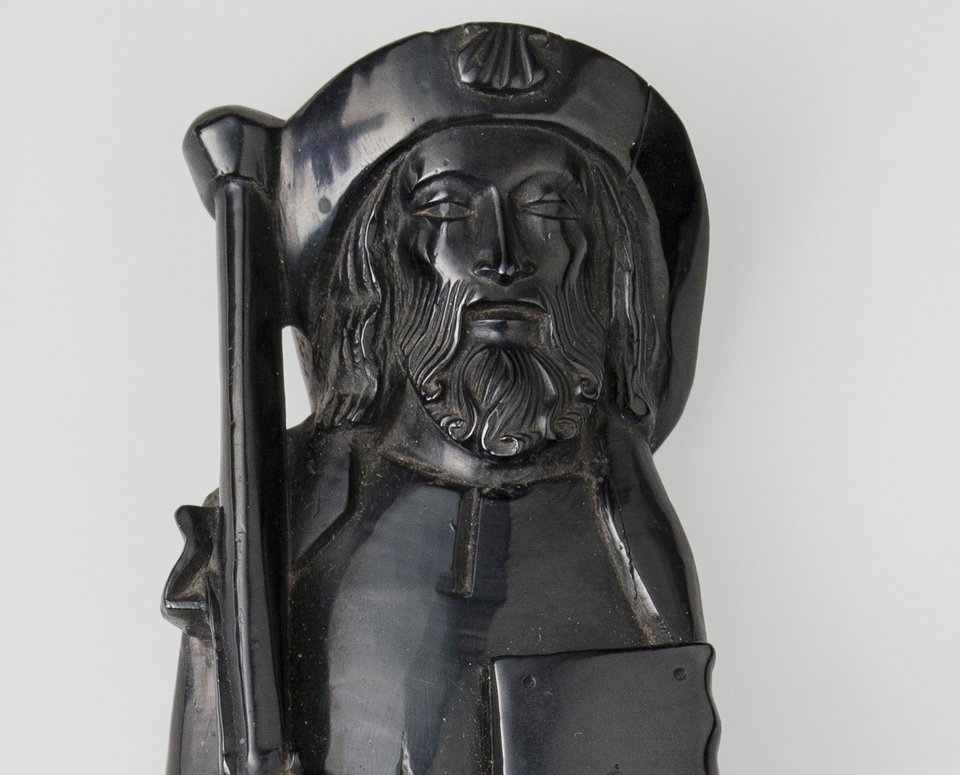
Jet itself is fossilized wood. It formed from ancient driftwood, buried and soaked with oily bitumen from the rock around it, and it counts as a kind of lignite, the lowest rank of coal. The jet of Whitby, on the Yorkshire coast, is about 183 million years old. It is light, feels warm in the hand and takes a mirror polish, and people have worn it for at least 5,500 years. By the 1400s, English speakers said “jet-black” for the deepest black.
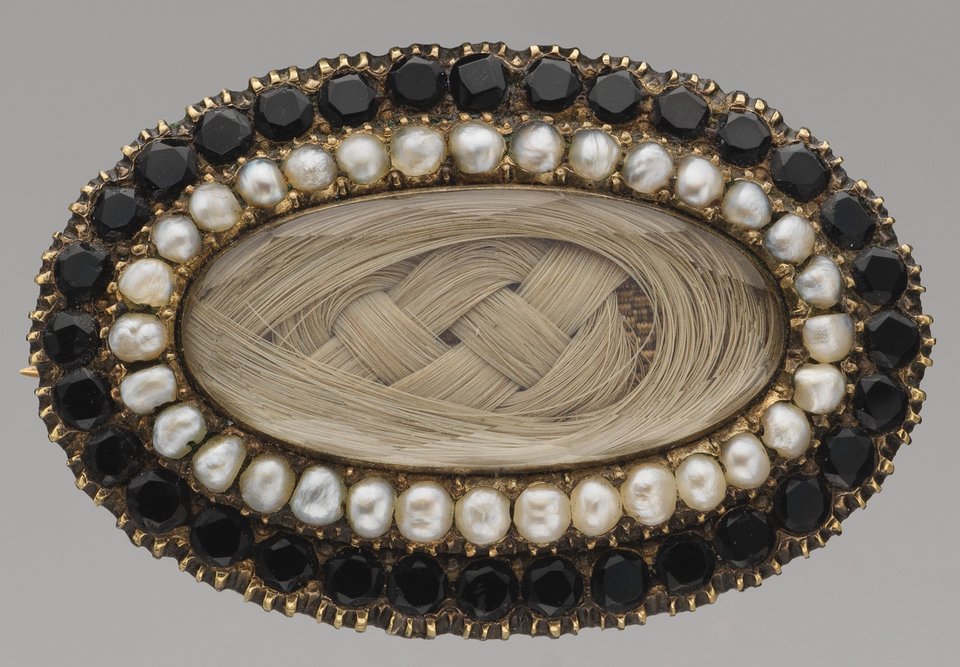
So where does the gray come from? Wikipedia’s shades of black gives #343434 for jet and credits the ISCC-NBS color dictionary, but that dictionary files jet black under plain black, centered on the darker #222222. The RAL color standard’s jet black is darker still, about #131516. Real jet is not a flat color either: in a museum photo, one lit, faceted jet bead averages #353535, almost exactly the code, while its shadowed facets drop to about #181817.
On screens, #343434 works as a soft black. White text on it has a contrast of about 12.4 to 1, and as a text color on white it is gentler than pure black. For a black that lives up to the name, use #131516 or darker. It pairs with pearl white and gold, as in Victorian jet jewelry, with warm amber, or with one strong red.